





Movie Overview
Title
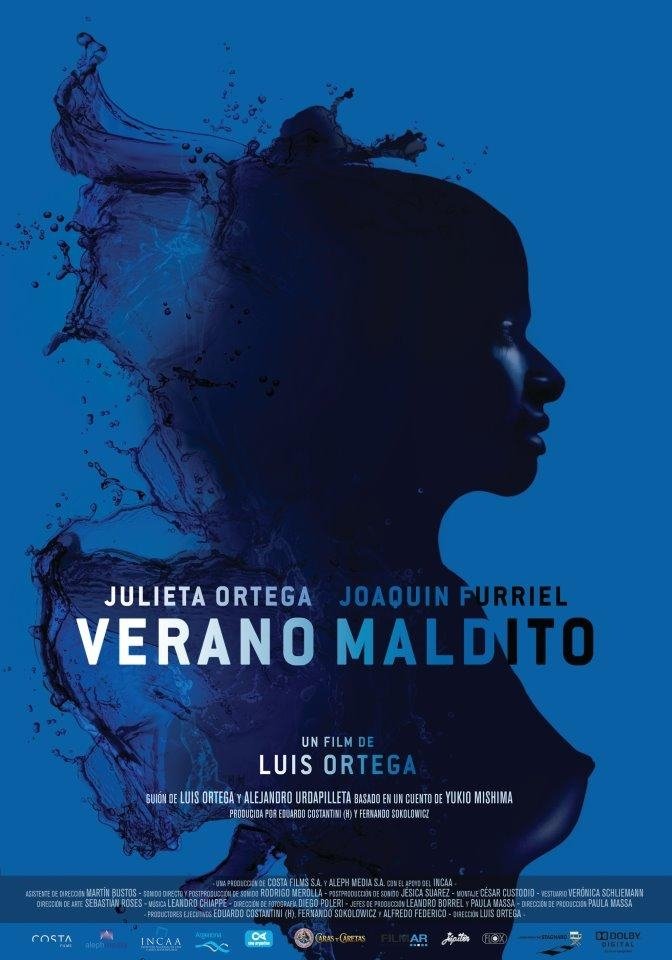
Verano maldito (Damn Summer)
Director
Luis Ortega
Release Date
03 November 2011
Runtime
1h 13m
Language
Spanish
Genre
Drama, Thriller
Production Companies
Costa FilmsAleph MediaProduzione Straordinaria
Age Rating
R Rated
| Title | Verano maldito (Damn Summer) |
|---|---|
| Director | Luis Ortega |
| Release Date | 03 November 2011 |
| Runtime | 1h 13m |
| Language | Spanish |
| Genre | Drama, Thriller |
| Production Companies | Costa FilmsAleph MediaProduzione Straordinaria |
| Age Rating | R Rated |
Movie Cast
Name
Character
Julieta Ortega
Julieta
Joaquín Furriel
Federico
Alejandro Urdapilleta
Tito
| Name | Character |
|---|---|
| Julieta Ortega | Julieta |
| Joaquín Furriel | Federico |
| Alejandro Urdapilleta | Tito |
Storyline
Julieta and Federico are parents of three boys, it is a high class family. He is a successful architect. They receive the visit of Tito, uncle of Federico, a gray man who has just left the prison. Tito wants to go to the sea and Federico proposes to go to a house that he himself built for some friends, but Federico stays in the city, working.
Movie Summary & Timeline
The film follows Julieta and Federico, a wealthy upper-class couple raising their three children. Federico is a successful architect whose structured life is disrupted when his uncle Tito, recently released from prison, comes to stay with the family. Seeking rest and change, Julieta and the children accompany Tito to a seaside house built by Federico, while Federico remains in the city for work.
What begins as a quiet coastal retreat gradually turns into an emotionally intense journey marked by tragedy, psychological breakdown, grief, and personal rebellion, ultimately testing the limits of family bonds, responsibility, and desire.
Scene
Timestamp
Details
Family Introduction
00:00
Julieta and Federico are introduced as an affluent family with three children, living a comfortable yet emotionally distant life.
Arrival at the Beach House
01:56
Julieta and the children arrive at the seaside house with Tito, setting the stage for a seemingly peaceful coastal stay.
Tito’s Health Emergency
11:53
Tito suddenly collapses at the beach after suffering a severe medical episode, leaving the family in shock.
Tragic Loss
18:40
Tito passes away, and shortly afterward, one of the children goes missing at the beach, presumed drowned, plunging Julieta into deep grief.
Emotional Breakdown
30:00
Federico and Julieta attempt to cope with the tragedy together, highlighting the strain and vulnerability in their marriage.
Psychological Decline
45:10
Julieta begins to display erratic behavior, struggling to manage her emotions and responsibilities after returning home.
Rebellion and Escape
52:13
Overwhelmed by grief and emotional turmoil, Julieta leaves home alone late at night, seeking escape and connection.
Final Turning Point
52:29
Julieta makes impulsive decisions that symbolize her complete emotional detachment and the collapse of her former life.
What begins as a quiet coastal retreat gradually turns into an emotionally intense journey marked by tragedy, psychological breakdown, grief, and personal rebellion, ultimately testing the limits of family bonds, responsibility, and desire.
| Scene | Timestamp | Details |
|---|---|---|
| Family Introduction | 00:00 | Julieta and Federico are introduced as an affluent family with three children, living a comfortable yet emotionally distant life. |
| Arrival at the Beach House | 01:56 | Julieta and the children arrive at the seaside house with Tito, setting the stage for a seemingly peaceful coastal stay. |
| Tito’s Health Emergency | 11:53 | Tito suddenly collapses at the beach after suffering a severe medical episode, leaving the family in shock. |
| Tragic Loss | 18:40 | Tito passes away, and shortly afterward, one of the children goes missing at the beach, presumed drowned, plunging Julieta into deep grief. |
| Emotional Breakdown | 30:00 | Federico and Julieta attempt to cope with the tragedy together, highlighting the strain and vulnerability in their marriage. |
| Psychological Decline | 45:10 | Julieta begins to display erratic behavior, struggling to manage her emotions and responsibilities after returning home. |
| Rebellion and Escape | 52:13 | Overwhelmed by grief and emotional turmoil, Julieta leaves home alone late at night, seeking escape and connection. |
| Final Turning Point | 52:29 | Julieta makes impulsive decisions that symbolize her complete emotional detachment and the collapse of her former life. |
IMDB Rating - 6.2/10
Where To Watch
🚧 Coming Soon
🚧 Coming Soon
Note: This movie is not currently available for streaming. Official platform and release details will be updated soon.
Facts & Trivia
- Title: Damn Summer (Original title: Verano maldito)
- Year of Release: 2011
- Country of Origin: Argentina
- Genre: Drama, Psychological, Family Tragedy
- Director & Co-Writer: Luis Ortega, a prominent figure in Argentine independent cinema known for his raw, provocative storytelling.
- Family Collaboration: The film is a notable family project. It stars Julieta Ortega, the director’s sister, in a leading role. Their father, Palito Ortega, is a legendary Argentine singer, actor, and former politician.
- Director’s Career: Luis Ortega directed his first feature film at the age of 19 and later gained international recognition for acclaimed television series such as Historia de un Clan and El Marginal.
- Main Cast: Julieta Ortega, Joaquín Furriel, and Alejandro Urdapilleta, delivering intense and emotionally layered performances.
- Synopsis: The story centers on a wealthy family whose routine collapses after a series of tragic events during a summer trip, leading to emotional disintegration, psychological instability, and moral conflict.
- Runtime: Approximately 73 minutes, making it a compact yet emotionally heavy viewing experience.
- Language: Spanish
- Filming Style: Minimalist and character-driven, with a strong focus on atmosphere, silence, and emotional tension rather than conventional narrative pacing.
- Themes: Grief, mental breakdown, family dysfunction, loss of control, emotional repression, and the fragility of social privilege.
- Multiple Titles: Internationally released under the English title Damn Summer. It was also associated with the working title No le mientas al diablo during early development stages.
- Critical Position: While not a mainstream commercial success, the film is often discussed within Argentine arthouse cinema for its disturbing realism and bold narrative choices.
- Audience Appeal: Best suited for viewers interested in psychological dramas, experimental cinema, and films that explore the darker side of family and emotional trauma.
- Title: Damn Summer (Original title: Verano maldito)
- Year of Release: 2011
- Country of Origin: Argentina
- Genre: Drama, Psychological, Family Tragedy
- Director & Co-Writer: Luis Ortega, a prominent figure in Argentine independent cinema known for his raw, provocative storytelling.
- Family Collaboration: The film is a notable family project. It stars Julieta Ortega, the director’s sister, in a leading role. Their father, Palito Ortega, is a legendary Argentine singer, actor, and former politician.
- Director’s Career: Luis Ortega directed his first feature film at the age of 19 and later gained international recognition for acclaimed television series such as Historia de un Clan and El Marginal.
- Main Cast: Julieta Ortega, Joaquín Furriel, and Alejandro Urdapilleta, delivering intense and emotionally layered performances.
- Synopsis: The story centers on a wealthy family whose routine collapses after a series of tragic events during a summer trip, leading to emotional disintegration, psychological instability, and moral conflict.
- Runtime: Approximately 73 minutes, making it a compact yet emotionally heavy viewing experience.
- Language: Spanish
- Filming Style: Minimalist and character-driven, with a strong focus on atmosphere, silence, and emotional tension rather than conventional narrative pacing.
- Themes: Grief, mental breakdown, family dysfunction, loss of control, emotional repression, and the fragility of social privilege.
- Multiple Titles: Internationally released under the English title Damn Summer. It was also associated with the working title No le mientas al diablo during early development stages.
- Critical Position: While not a mainstream commercial success, the film is often discussed within Argentine arthouse cinema for its disturbing realism and bold narrative choices.
- Audience Appeal: Best suited for viewers interested in psychological dramas, experimental cinema, and films that explore the darker side of family and emotional trauma.