




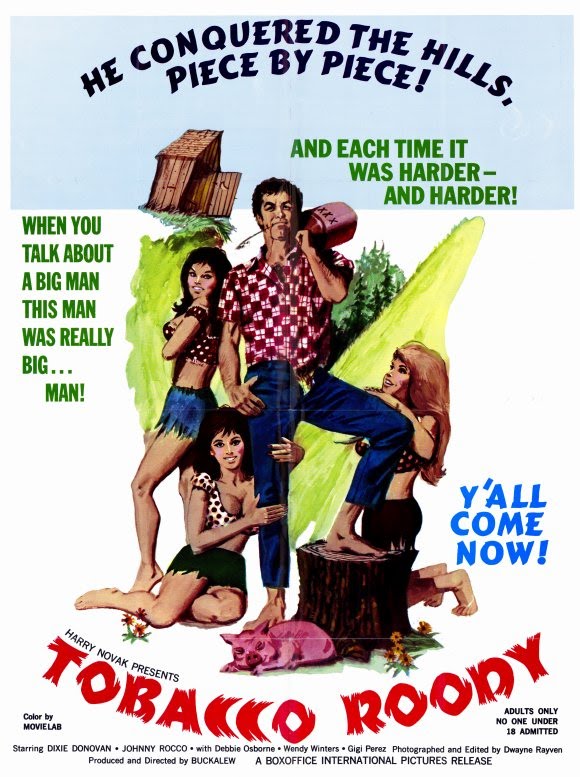
Released in 1970, Tobacco Roody stands as a raw and thought-provoking film that reflects the darker realities of human life during a time when cinema was beginning to experiment with bold themes. Unlike glamorous mainstream movies of its era, Tobacco Roody dives deep into the world of addiction, poverty, and moral conflict, offering a story that feels uncomfortable yet honest.
Movie Overview
Title
Tobacco Roody
Release Year
1970
Director
Bethel G. Buckalew
Runtime
Approx. 100 Minutes
Language
English
Genre
Drama
Country
United States
Age Rating
Not Rated
| Title | Tobacco Roody |
|---|---|
| Release Year | 1970 |
| Director | Bethel G. Buckalew |
| Runtime | Approx. 100 Minutes |
| Language | English |
| Genre | Drama |
| Country | United States |
| Age Rating | Not Rated |
Movie Cast
Actor
Role
Dixie Donovan
Tootie
Johnny Rocco
Mose
Debbie Osborne
Liz
Wendy Winders
Lulu
Gigi Perez
Caroline
| Actor | Role |
|---|---|
| Dixie Donovan | Tootie |
| Johnny Rocco | Mose |
| Debbie Osborne | Liz |
| Wendy Winders | Lulu |
| Gigi Perez | Caroline |
Storyline
Tobacco Roody (1970) is a gritty drama that delves into the harsh realities of addiction, poverty, and survival in a society that offers little mercy to the vulnerable. Set against a bleak social backdrop, the film follows individuals trapped in a cycle of dependency, where tobacco becomes both an escape and a slow form of self-destruction.
The story unfolds through everyday moments—strained relationships, financial hardship, and emotional exhaustion—showing how addiction quietly takes control of lives. Rather than focusing on a single hero, the narrative paints a broader picture of people struggling against inner demons while being shaped by their environment.
As dependence deepens, personal choices begin to affect families and communities, exposing how one individual’s habit can ripple outward with lasting consequences. The film avoids dramatic exaggeration, choosing instead a realistic and uncomfortable honesty that mirrors real life.
More than just a film about addiction, Tobacco Roody is a reflection on human weakness and resilience. It challenges viewers to look beyond judgment and consider the emotional and social conditions that drive people toward destructive paths, making it a powerful and thought-provoking classic of its time.
Movie Summary & Key Moments
Key Moment
Description
A Life of Habit
The film opens by introducing characters caught in monotonous daily routines, where tobacco use is deeply embedded in everyday life and seen as a normal escape from hardship.
The Grip of Addiction
As the story unfolds, tobacco dependency begins to dominate personal choices, revealing how addiction quietly controls behavior and decision-making.
Strained Relationships
Family ties and friendships start to weaken as addiction creates emotional distance, mistrust, and recurring conflict within the community.
Moments of Realization
Key scenes highlight moments of self-awareness, where characters briefly confront the damage caused by their habits, though change proves difficult.
The Social Cost
The narrative expands to show how addiction affects not just individuals, but families and society, exposing cycles of poverty and emotional neglect.
An Uncomfortable Ending
The film concludes without easy answers, leaving viewers to reflect on addiction as a social issue rather than a personal failure. Tobacco Roody ends on a realistic and thought-provoking note.
| Key Moment | Description |
|---|---|
| A Life of Habit | The film opens by introducing characters caught in monotonous daily routines, where tobacco use is deeply embedded in everyday life and seen as a normal escape from hardship. |
| The Grip of Addiction | As the story unfolds, tobacco dependency begins to dominate personal choices, revealing how addiction quietly controls behavior and decision-making. |
| Strained Relationships | Family ties and friendships start to weaken as addiction creates emotional distance, mistrust, and recurring conflict within the community. |
| Moments of Realization | Key scenes highlight moments of self-awareness, where characters briefly confront the damage caused by their habits, though change proves difficult. |
| The Social Cost | The narrative expands to show how addiction affects not just individuals, but families and society, exposing cycles of poverty and emotional neglect. |
| An Uncomfortable Ending | The film concludes without easy answers, leaving viewers to reflect on addiction as a social issue rather than a personal failure. Tobacco Roody ends on a realistic and thought-provoking note. |
IMDB Rating - 4.9/10
Where To Watch
Coming Soon
Streaming platform information will be updated once available
Note: The movie is not yet available for streaming. Availability will be updated once it is released on digital platforms.
Facts & Trivia
- Title: Tobacco Roody (1970) is a gritty drama that focuses on addiction, survival, and the emotional cost of destructive habits.
- Release Era: The film was released in 1970, a period when cinema began experimenting with darker, socially driven themes.
- Genre: It is primarily classified as a drama, with strong elements of social realism.
- Central Theme: The story explores how tobacco addiction becomes a coping mechanism shaped by poverty, stress, and emotional neglect.
- Realistic Approach: Rather than glamorizing addiction, the film presents its effects in a raw and uncomfortable manner.
- Character Focus: The narrative emphasizes flawed, ordinary individuals instead of traditional heroes or villains.
- Minimal Sensationalism: The film avoids exaggerated drama, relying instead on everyday situations and subtle emotional tension.
- Social Commentary: Tobacco Roody quietly criticizes social systems that punish individuals while ignoring the conditions that lead to addiction.
- Cinematography: Muted tones and natural lighting are used to reflect the bleakness of the characters’ lives.
- Pacing: The slow, deliberate pacing allows viewers to absorb the emotional weight of the story.
- Cultural Snapshot: The film serves as a time capsule of attitudes toward addiction and working-class struggle in the late 1960s–70s.
- Cast Records: Complete cast details are not widely archived, adding to the film’s obscure and cult status.
- Critical View: While not a mainstream success, the film gained appreciation among viewers who value realism over entertainment.
- Enduring Relevance: Despite its age, the film’s themes remain relevant in discussions about addiction and mental health.
- Legacy: Today, Tobacco Roody is remembered as a quiet, hard-hitting film that prioritizes truth over comfort.
- Title: Tobacco Roody (1970) is a gritty drama that focuses on addiction, survival, and the emotional cost of destructive habits.
- Release Era: The film was released in 1970, a period when cinema began experimenting with darker, socially driven themes.
- Genre: It is primarily classified as a drama, with strong elements of social realism.
- Central Theme: The story explores how tobacco addiction becomes a coping mechanism shaped by poverty, stress, and emotional neglect.
- Realistic Approach: Rather than glamorizing addiction, the film presents its effects in a raw and uncomfortable manner.
- Character Focus: The narrative emphasizes flawed, ordinary individuals instead of traditional heroes or villains.
- Minimal Sensationalism: The film avoids exaggerated drama, relying instead on everyday situations and subtle emotional tension.
- Social Commentary: Tobacco Roody quietly criticizes social systems that punish individuals while ignoring the conditions that lead to addiction.
- Cinematography: Muted tones and natural lighting are used to reflect the bleakness of the characters’ lives.
- Pacing: The slow, deliberate pacing allows viewers to absorb the emotional weight of the story.
- Cultural Snapshot: The film serves as a time capsule of attitudes toward addiction and working-class struggle in the late 1960s–70s.
- Cast Records: Complete cast details are not widely archived, adding to the film’s obscure and cult status.
- Critical View: While not a mainstream success, the film gained appreciation among viewers who value realism over entertainment.
- Enduring Relevance: Despite its age, the film’s themes remain relevant in discussions about addiction and mental health.
- Legacy: Today, Tobacco Roody is remembered as a quiet, hard-hitting film that prioritizes truth over comfort.
FAQs About Tobacco Roody (1970)
1. What is Tobacco Roody (1970) about?
Tobacco Roody is a social drama that explores addiction, emotional struggle, and survival. The film focuses on ordinary individuals whose lives are shaped and slowly consumed by tobacco dependency and the harsh realities surrounding it.
2. What genre does Tobacco Roody belong to?
The film is primarily a drama, with strong elements of social realism and psychological depth.
3. Is Tobacco Roody based on a true story?
No, the film is not based on a specific true story. However, it reflects real-life issues and social conditions common during the late 1960s and early 1970s.
4. What makes Tobacco Roody different from other films of its time?
Unlike many mainstream films of the era, Tobacco Roody avoids glamour and focuses on raw, everyday realities, presenting addiction as a social issue rather than a personal failure.
5. Is Tobacco Roody suitable for all audiences?
The film deals with mature themes such as addiction and emotional distress. Viewer discretion is advised, especially for younger audiences.
6. Where can I watch Tobacco Roody (1970)?
Due to its age and limited archival distribution, the film’s availability varies. It may be found through classic film collections, DVD archives, or specialty platforms that feature vintage and cult cinema.
1. What is Tobacco Roody (1970) about?
Tobacco Roody is a social drama that explores addiction, emotional struggle, and survival. The film focuses on ordinary individuals whose lives are shaped and slowly consumed by tobacco dependency and the harsh realities surrounding it.
2. What genre does Tobacco Roody belong to?
The film is primarily a drama, with strong elements of social realism and psychological depth.
3. Is Tobacco Roody based on a true story?
No, the film is not based on a specific true story. However, it reflects real-life issues and social conditions common during the late 1960s and early 1970s.
4. What makes Tobacco Roody different from other films of its time?
Unlike many mainstream films of the era, Tobacco Roody avoids glamour and focuses on raw, everyday realities, presenting addiction as a social issue rather than a personal failure.
5. Is Tobacco Roody suitable for all audiences?
The film deals with mature themes such as addiction and emotional distress. Viewer discretion is advised, especially for younger audiences.
6. Where can I watch Tobacco Roody (1970)?
Due to its age and limited archival distribution, the film’s availability varies. It may be found through classic film collections, DVD archives, or specialty platforms that feature vintage and cult cinema.
Similar Movies Like Tobacco Roody (1970)
- Days of Wine and Roses (1962) – A powerful drama that explores alcoholism, addiction, and the emotional toll it takes on relationships.
- The Panic in Needle Park (1971) – A raw and realistic portrayal of addiction and survival on the margins of society.
- Midnight Cowboy (1969) – A gritty character-driven film about loneliness, desperation, and human connection in harsh social conditions.
- A Woman Under the Influence (1974) – An intense emotional drama focusing on personal breakdown, social pressure, and misunderstood vulnerability.
- They Shoot Horses, Don’t They? (1969) – A bleak look at desperation and exploitation, reflecting how systems wear people down emotionally.
- Scarecrow (1973) – A quiet, character-focused road drama about broken dreams, companionship, and survival.
- Days of Wine and Roses (1962) – A powerful drama that explores alcoholism, addiction, and the emotional toll it takes on relationships.
- The Panic in Needle Park (1971) – A raw and realistic portrayal of addiction and survival on the margins of society.
- Midnight Cowboy (1969) – A gritty character-driven film about loneliness, desperation, and human connection in harsh social conditions.
- A Woman Under the Influence (1974) – An intense emotional drama focusing on personal breakdown, social pressure, and misunderstood vulnerability.
- They Shoot Horses, Don’t They? (1969) – A bleak look at desperation and exploitation, reflecting how systems wear people down emotionally.
- Scarecrow (1973) – A quiet, character-focused road drama about broken dreams, companionship, and survival.