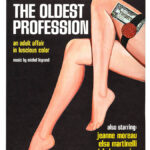

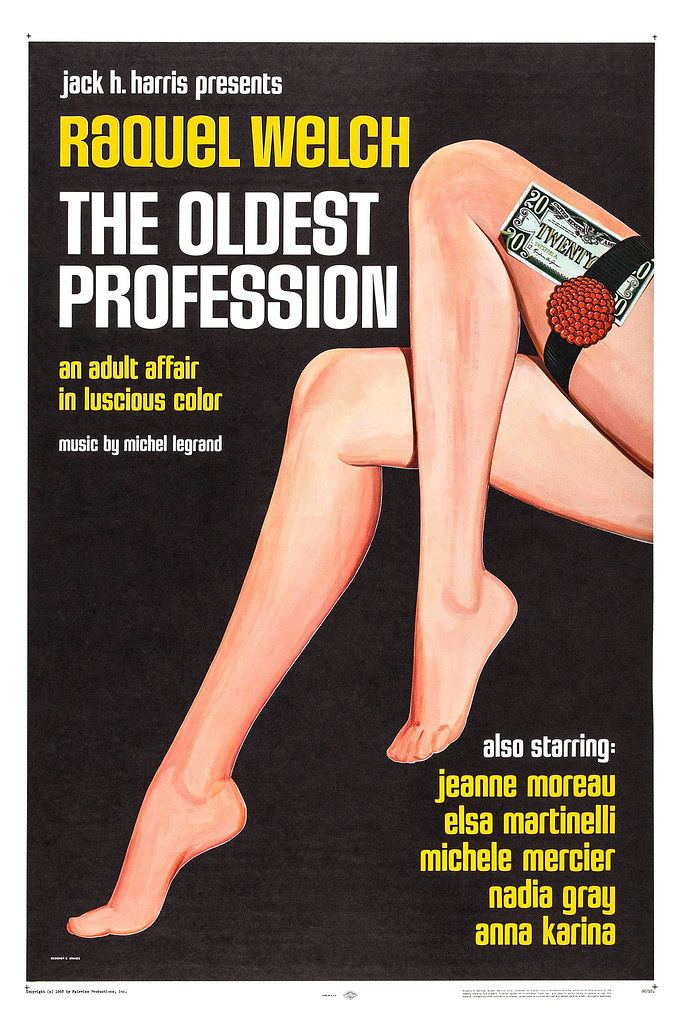
Released in 1967, The Oldest Profession (original French title: Le Plus Vieux Métier du Monde) arrived at a time when cinema across Europe was experimenting with bold themes and artistic freedom. This French anthology film brought together several noted directors, each presenting a short story centered around what is often referred to as “the world’s oldest profession.
Movie Overview
Title
The Oldest Profession (Le Plus Vieux Métier du Monde)
Release Year
1967
Directors
Claude Autant-Lara, Jean-Luc Godard, Philippe de Broca, Franco Indovina, Michael Pfleghar
Runtime
Approx. 120 Minutes
Language
French
Genre
Comedy, Drama, Anthology
Country
France, Italy, West Germany
Age Rating
A rated
| Title | The Oldest Profession (Le Plus Vieux Métier du Monde) |
|---|---|
| Release Year | 1967 |
| Directors | Claude Autant-Lara, Jean-Luc Godard, Philippe de Broca, Franco Indovina, Michael Pfleghar |
| Runtime | Approx. 120 Minutes |
| Language | French |
| Genre | Comedy, Drama, Anthology |
| Country | France, Italy, West Germany |
| Age Rating | A rated |
Movie Cast
Actor
Segment / Role
Michèle Mercier
Various Historical Characters
Anna Karina
Segment Character (Directed by Jean-Luc Godard)
Elsa Martinelli
Episode Appearance
Jeanne Moreau
Featured Segment Role
Bernard Blier
Supporting Role
Robert Morley
Supporting Role
| Actor | Segment / Role |
|---|---|
| Michèle Mercier | Various Historical Characters |
| Anna Karina | Segment Character (Directed by Jean-Luc Godard) |
| Elsa Martinelli | Episode Appearance |
| Jeanne Moreau | Featured Segment Role |
| Bernard Blier | Supporting Role |
| Robert Morley | Supporting Role |
Storyline
The Oldest Profession (1967), originally titled Le Plus Vieux Métier du Monde, is a French anthology film that explores the evolution of society’s oldest profession across different eras of history. Rather than following a single narrative, the film is divided into multiple segments, each directed by a different filmmaker and set in a distinct time period.
From prehistoric times and ancient civilizations to the Middle Ages, the Belle Époque, and even a futuristic world, each story presents a unique perspective on human relationships, desire, and social power dynamics. Through satire, humor, and occasional irony, the film reflects how cultural norms may change with time, yet certain human instincts remain constant.
Every episode carries its own tone—some playful and comedic, others thoughtful and subtly dramatic. The changing costumes, settings, and storytelling styles give the audience a visual journey through history while highlighting shifting attitudes toward morality and freedom.
More than just a period-based anthology, the film serves as a social commentary on love, survival, and independence. By blending artistic storytelling with historical imagination, The Oldest Profession captures the spirit of 1960s European cinema—bold, experimental, and unafraid to explore complex themes through creative expression.
Movie Summary & Key Moments
Key Moment
Description
Prehistoric Beginnings
The film opens in ancient times, presenting a humorous and symbolic take on survival, attraction, and early human relationships.
Ancient Civilizations
Moving into classical eras, the story explores how beauty, power, and social hierarchy shape personal choices and human interaction.
The Middle Ages
In a more restrictive and moralistic period, the narrative reflects on secrecy, societal judgment, and the contrast between public virtue and private desire.
The Belle Époque
Set in a more glamorous historical setting, this segment highlights elegance, charm, and the changing cultural landscape of romance and independence.
Modern-Day Reflections
As the timeline approaches the 20th century, the film adopts a sharper, sometimes satirical tone, examining contemporary attitudes toward relationships and freedom.
Futuristic Vision
In its most imaginative segment, the story jumps into the future, questioning whether technological progress truly changes human nature or simply reshapes it.
Changing Times, Constant Instincts
Across all eras, the film subtly suggests that while societies evolve, core human emotions—desire, ambition, survival, and longing—remain remarkably consistent.
An Open-Ended Reflection
The anthology concludes without a single moral answer, instead inviting viewers to reflect on how history, culture, and personal freedom intersect across time.
| Key Moment | Description |
|---|---|
| Prehistoric Beginnings | The film opens in ancient times, presenting a humorous and symbolic take on survival, attraction, and early human relationships. |
| Ancient Civilizations | Moving into classical eras, the story explores how beauty, power, and social hierarchy shape personal choices and human interaction. |
| The Middle Ages | In a more restrictive and moralistic period, the narrative reflects on secrecy, societal judgment, and the contrast between public virtue and private desire. |
| The Belle Époque | Set in a more glamorous historical setting, this segment highlights elegance, charm, and the changing cultural landscape of romance and independence. |
| Modern-Day Reflections | As the timeline approaches the 20th century, the film adopts a sharper, sometimes satirical tone, examining contemporary attitudes toward relationships and freedom. |
| Futuristic Vision | In its most imaginative segment, the story jumps into the future, questioning whether technological progress truly changes human nature or simply reshapes it. |
| Changing Times, Constant Instincts | Across all eras, the film subtly suggests that while societies evolve, core human emotions—desire, ambition, survival, and longing—remain remarkably consistent. |
| An Open-Ended Reflection | The anthology concludes without a single moral answer, instead inviting viewers to reflect on how history, culture, and personal freedom intersect across time. |
IMDB Rating - 5.4/10
Where To Watch
Coming Soon
Streaming platform information will be updated once available
Note: The movie is not yet available for streaming. Availability will be updated once it is released on digital platforms.
Facts & Trivia
- Original French Title: The film’s original title, Le Plus Vieux Métier du Monde, translates to “The Oldest Profession in the World,” directly reflecting its central theme.
- Anthology Format: Unlike traditional films, it is structured as a collection of short stories, each directed by a different filmmaker.
- Multiple Directors: The project brought together five European directors, each contributing a segment set in a different historical period.
- Jean-Luc Godard’s Segment: One of the episodes was directed by Jean-Luc Godard, known for his experimental and unconventional storytelling style.
- Historical Timeline Concept: The narrative moves from prehistoric times through various historical eras and even imagines a futuristic setting.
- International Collaboration: The film was a co-production between France, Italy, and West Germany, reflecting strong European cinematic cooperation in the 1960s.
- 1960s Cultural Climate: Released in 1967, the movie arrived during a period of social change and artistic experimentation in European cinema.
- Satirical Tone: Many segments use humor and irony to comment on society, morality, and power structures rather than presenting straightforward drama.
- Lavish Costumes & Sets: Each era is visually distinguished through detailed costumes and production design that reflect the time period portrayed.
- Controversial on Release: Due to its mature subject matter, the film faced mixed reactions and censorship challenges in some regions.
- Blend of Comedy and Drama: The anthology balances light-hearted storytelling with reflective social commentary.
- Time Capsule of European Cinema: Today, the film is often viewed as a snapshot of 1960s European artistic freedom and evolving cinematic boundaries.
- Original French Title: The film’s original title, Le Plus Vieux Métier du Monde, translates to “The Oldest Profession in the World,” directly reflecting its central theme.
- Anthology Format: Unlike traditional films, it is structured as a collection of short stories, each directed by a different filmmaker.
- Multiple Directors: The project brought together five European directors, each contributing a segment set in a different historical period.
- Jean-Luc Godard’s Segment: One of the episodes was directed by Jean-Luc Godard, known for his experimental and unconventional storytelling style.
- Historical Timeline Concept: The narrative moves from prehistoric times through various historical eras and even imagines a futuristic setting.
- International Collaboration: The film was a co-production between France, Italy, and West Germany, reflecting strong European cinematic cooperation in the 1960s.
- 1960s Cultural Climate: Released in 1967, the movie arrived during a period of social change and artistic experimentation in European cinema.
- Satirical Tone: Many segments use humor and irony to comment on society, morality, and power structures rather than presenting straightforward drama.
- Lavish Costumes & Sets: Each era is visually distinguished through detailed costumes and production design that reflect the time period portrayed.
- Controversial on Release: Due to its mature subject matter, the film faced mixed reactions and censorship challenges in some regions.
- Blend of Comedy and Drama: The anthology balances light-hearted storytelling with reflective social commentary.
- Time Capsule of European Cinema: Today, the film is often viewed as a snapshot of 1960s European artistic freedom and evolving cinematic boundaries.
FAQs About The Oldest Profession (1967)
1. What is The Oldest Profession (1967) about?
The Oldest Profession, originally titled Le Plus Vieux Métier du Monde, is a French anthology film that explores the evolution of society’s oldest profession across different historical eras, blending satire, humor, and social commentary.
2. Is The Oldest Profession based on one continuous story?
No. The film is structured as multiple short segments, each directed by a different filmmaker and set in a unique historical period.
3. Who directed The Oldest Profession (1967)?
The film was a collaborative project directed by Claude Autant-Lara, Jean-Luc Godard, Philippe de Broca, Franco Indovina, and Michael Pfleghar.
4. What genre does the film belong to?
It falls under the comedy-drama anthology genre, combining historical settings with satirical storytelling.
5. Is The Oldest Profession suitable for all audiences?
The film contains mature themes and is generally recommended for adult audiences.
6. Where can I watch The Oldest Profession (1967)?
Availability depends on region. The film may be found on classic European cinema platforms, specialty streaming services, or DVD collections focused on 1960s anthology films.
1. What is The Oldest Profession (1967) about?
The Oldest Profession, originally titled Le Plus Vieux Métier du Monde, is a French anthology film that explores the evolution of society’s oldest profession across different historical eras, blending satire, humor, and social commentary.
2. Is The Oldest Profession based on one continuous story?
No. The film is structured as multiple short segments, each directed by a different filmmaker and set in a unique historical period.
3. Who directed The Oldest Profession (1967)?
The film was a collaborative project directed by Claude Autant-Lara, Jean-Luc Godard, Philippe de Broca, Franco Indovina, and Michael Pfleghar.
4. What genre does the film belong to?
It falls under the comedy-drama anthology genre, combining historical settings with satirical storytelling.
5. Is The Oldest Profession suitable for all audiences?
The film contains mature themes and is generally recommended for adult audiences.
6. Where can I watch The Oldest Profession (1967)?
Availability depends on region. The film may be found on classic European cinema platforms, specialty streaming services, or DVD collections focused on 1960s anthology films.
Similar Movies Like The Oldest Profession (1967)
- Spirits of the Dead (1968) – An anthology film featuring segments by different directors, blending historical settings with artistic storytelling and psychological themes.
- Boccaccio '70 (1962) – A multi-director Italian anthology that explores romance, morality, and society through satirical and dramatic short stories.
- Yesterday, Today and Tomorrow (1963) – A stylish European comedy-drama presenting three separate stories set in different social environments.
- Immoral Tales (1974) – A historical anthology film examining desire and power across different time periods.
- Paris vu par… (1965) – A French anthology where various directors present short stories set in different districts of Paris.
- The Decameron (1971) – A classic European film inspired by historical tales, combining humor, drama, and social commentary.
- Spirits of the Dead (1968) – An anthology film featuring segments by different directors, blending historical settings with artistic storytelling and psychological themes.
- Boccaccio '70 (1962) – A multi-director Italian anthology that explores romance, morality, and society through satirical and dramatic short stories.
- Yesterday, Today and Tomorrow (1963) – A stylish European comedy-drama presenting three separate stories set in different social environments.
- Immoral Tales (1974) – A historical anthology film examining desire and power across different time periods.
- Paris vu par… (1965) – A French anthology where various directors present short stories set in different districts of Paris.
- The Decameron (1971) – A classic European film inspired by historical tales, combining humor, drama, and social commentary.