





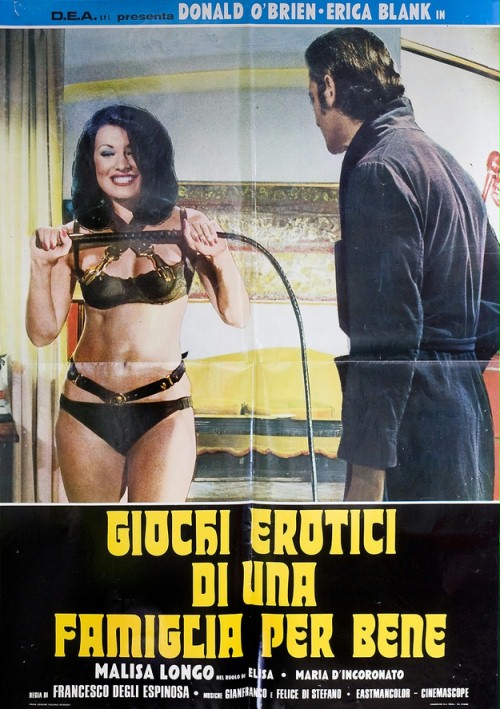
Released in 1975, Giochi erotici di una famiglia per bene (translated loosely as Erotic Games of a Respectable Family) belongs to that daring wave of European cinema where filmmakers weren’t afraid to poke at society’s most carefully protected masks. On the surface, it looks like another provocative Italian drama from the ’70s—but spend a little time with it, and you realize it’s less about shock and more about hypocrisy, repression, and the fragile idea of “decency.”
Movie Overview
Title
Giochi erotici di una famiglia per bene
Release Year
1975
Director
Francesco Degli Espinosa
Runtime
Approx. 95 Minutes
Language
Italian
Genre
Erotic Drama, Psychological
Country
Italy
Age Rating
A Rated
| Title | Giochi erotici di una famiglia per bene |
|---|---|
| Release Year | 1975 |
| Director | Francesco Degli Espinosa |
| Runtime | Approx. 95 Minutes |
| Language | Italian |
| Genre | Erotic Drama, Psychological |
| Country | Italy |
| Age Rating | A Rated |
Movie Cast
Actor
Role
Femi Benussi
Family Woman
Maurizio Bonuglia
Husband
Marino Masé
Male Family Member
Erika Blanc
Supporting Role
| Actor | Role |
|---|---|
| Femi Benussi | Family Woman |
| Maurizio Bonuglia | Husband |
| Marino Masé | Male Family Member |
| Erika Blanc | Supporting Role |
Storyline
Giochi erotici di una famiglia per bene (1975) unfolds inside the polished walls of a seemingly respectable Italian household, where appearances matter more than honesty. From the outside, the family represents tradition, discipline, and moral order—but beneath that surface lies emotional coldness, repression, and quiet tension.
As daily routines continue with forced normalcy, subtle interactions begin to reveal unspoken desires and psychological power struggles among the family members. Conversations are restrained, emotions are controlled, and silence becomes a weapon—allowing forbidden thoughts to grow in the absence of truth.
The film explores how rigid social roles and moral hypocrisy slowly erode genuine human connection. What begins as emotional discomfort gradually turns into dangerous intimacy, exposing the fragile boundary between propriety and desire.
More than an erotic drama, Giochi erotici di una famiglia per bene is a disturbing psychological portrait of repression within the traditional family structure. Its restrained storytelling and uneasy atmosphere force the viewer to confront an uncomfortable question: how much darkness can hide behind the mask of respectability?
Movie Summary & Key Moments
Key Moment
Description
The Perfect Image
The film opens by presenting a well-respected family whose daily life appears orderly and morally sound, establishing a façade of respectability that soon begins to feel artificial.
Hidden Relationships
Beneath the surface, private encounters and secret liaisons hint at emotional distance within the marriage, revealing cracks in the family’s carefully maintained image.
The Husband’s Double Life
The husband is shown engaging in intimate relationships outside the marriage, emphasizing his hypocrisy and the imbalance of power within the household.
A Moment of Discovery
When the husband unexpectedly returns home, he finds his wife in bed with another man. The scene is restrained, focusing on the shock of the discovery rather than explicit action.
Memory and Reality
Later, a flashback revisits this moment, extending it through tender gestures and physical closeness, suggesting emotional intimacy rather than mere provocation.
Escalating Tension
As repression gives way to confrontation, intimate moments unfold between various characters, exposing jealousy, control, and the destructive effects of silence.
A Violent Turning Point
In the film’s final act, a tense encounter between husband and wife culminates in tragedy, transforming emotional manipulation into irreversible violence.
An Unsettling End
The conclusion offers no moral comfort, leaving viewers with a chilling reflection on hypocrisy, repression, and the devastating cost of maintaining appearances.
| Key Moment | Description |
|---|---|
| The Perfect Image | The film opens by presenting a well-respected family whose daily life appears orderly and morally sound, establishing a façade of respectability that soon begins to feel artificial. |
| Hidden Relationships | Beneath the surface, private encounters and secret liaisons hint at emotional distance within the marriage, revealing cracks in the family’s carefully maintained image. |
| The Husband’s Double Life | The husband is shown engaging in intimate relationships outside the marriage, emphasizing his hypocrisy and the imbalance of power within the household. |
| A Moment of Discovery | When the husband unexpectedly returns home, he finds his wife in bed with another man. The scene is restrained, focusing on the shock of the discovery rather than explicit action. |
| Memory and Reality | Later, a flashback revisits this moment, extending it through tender gestures and physical closeness, suggesting emotional intimacy rather than mere provocation. |
| Escalating Tension | As repression gives way to confrontation, intimate moments unfold between various characters, exposing jealousy, control, and the destructive effects of silence. |
| A Violent Turning Point | In the film’s final act, a tense encounter between husband and wife culminates in tragedy, transforming emotional manipulation into irreversible violence. |
| An Unsettling End | The conclusion offers no moral comfort, leaving viewers with a chilling reflection on hypocrisy, repression, and the devastating cost of maintaining appearances. |
IMDB Rating - 5.6/10
Where To Watch
Coming Soon
Streaming platform information will be updated once available
Note: The movie is not yet available for streaming. Availability will be updated once it is released on digital platforms.
Facts & Trivia
- Title Meaning: Giochi erotici di una famiglia per bene translates to “Erotic Games of a Respectable Family,” highlighting the contrast between public morality and private behavior.
- Release Year: The film was released in 1975, during a period when Italian cinema openly challenged traditional views on family, sexuality, and authority.
- Genre: It is best described as an erotic psychological drama, focusing more on repression and hypocrisy than explicit provocation.
- European Art-House Influence: Unlike exploitation-style erotic films, this movie leans toward an art-house approach with controlled pacing and restrained visuals.
- Social Commentary: The story critiques the idea of the “perfect family,” exposing how rigid social roles can suffocate emotional honesty.
- Eroticism as a Tool: Intimate scenes are used symbolically to represent power, control, and emotional imbalance rather than pure pleasure.
- Character Dynamics: The husband’s double standards play a central role, emphasizing male authority and moral hypocrisy within the household.
- Use of Silence: Long pauses, minimal dialogue, and uncomfortable stillness are deliberately used to build psychological tension.
- Cinematography: The film favors composed interiors and controlled framing, reinforcing the feeling of emotional confinement.
- Flashback Structure: Certain key moments are revisited through flashbacks, adding emotional depth and altering the viewer’s perception of events.
- Violence and Control: The narrative ultimately links repression and jealousy with violence, underlining the destructive cost of emotional denial.
- Adult Themes: The film deals with adultery, manipulation, and psychological domination, making it strictly suitable for adult audiences.
- Reception: At the time of release, the film attracted controversy for its themes, though it found appreciation among viewers of provocative European cinema.
- Legacy: Today, it is remembered as a disturbing yet thoughtful example of 1970s Italian erotic drama.
- Core Message: The film suggests that appearances of respectability can hide emotional cruelty—and that silence can be just as destructive as desire.
- Title Meaning: Giochi erotici di una famiglia per bene translates to “Erotic Games of a Respectable Family,” highlighting the contrast between public morality and private behavior.
- Release Year: The film was released in 1975, during a period when Italian cinema openly challenged traditional views on family, sexuality, and authority.
- Genre: It is best described as an erotic psychological drama, focusing more on repression and hypocrisy than explicit provocation.
- European Art-House Influence: Unlike exploitation-style erotic films, this movie leans toward an art-house approach with controlled pacing and restrained visuals.
- Social Commentary: The story critiques the idea of the “perfect family,” exposing how rigid social roles can suffocate emotional honesty.
- Eroticism as a Tool: Intimate scenes are used symbolically to represent power, control, and emotional imbalance rather than pure pleasure.
- Character Dynamics: The husband’s double standards play a central role, emphasizing male authority and moral hypocrisy within the household.
- Use of Silence: Long pauses, minimal dialogue, and uncomfortable stillness are deliberately used to build psychological tension.
- Cinematography: The film favors composed interiors and controlled framing, reinforcing the feeling of emotional confinement.
- Flashback Structure: Certain key moments are revisited through flashbacks, adding emotional depth and altering the viewer’s perception of events.
- Violence and Control: The narrative ultimately links repression and jealousy with violence, underlining the destructive cost of emotional denial.
- Adult Themes: The film deals with adultery, manipulation, and psychological domination, making it strictly suitable for adult audiences.
- Reception: At the time of release, the film attracted controversy for its themes, though it found appreciation among viewers of provocative European cinema.
- Legacy: Today, it is remembered as a disturbing yet thoughtful example of 1970s Italian erotic drama.
- Core Message: The film suggests that appearances of respectability can hide emotional cruelty—and that silence can be just as destructive as desire.
FAQs About Giochi erotici di una famiglia per bene (1975)
1. What is Giochi erotici di una famiglia per bene (1975) about?
Giochi erotici di una famiglia per bene is an Italian erotic psychological drama that explores the hidden tensions, repression, and hypocrisy within a seemingly respectable family. The film examines how silence and moral control can lead to destructive emotional consequences.
2. Is the film purely erotic in nature?
No. While the film contains adult themes and intimate situations, its primary focus is psychological tension, power dynamics, and social commentary rather than explicit eroticism.
3. What genre does the film belong to?
The movie is best described as an erotic psychological drama with strong elements of social critique and emotional conflict.
4. Why is the film considered controversial?
Upon release, the film drew controversy for challenging traditional family values and openly portraying adultery, repression, and moral double standards within a conservative household.
5. Is Giochi erotici di una famiglia per bene suitable for all audiences?
No. Due to its adult themes, sexual situations, and psychological violence, the film is intended strictly for mature audiences.
6. Where can I watch Giochi erotici di una famiglia per bene (1975)?
Availability varies by region. The film may be found through classic European cinema distributors, physical media releases, or specialized streaming platforms focused on vintage Italian films.
1. What is Giochi erotici di una famiglia per bene (1975) about?
Giochi erotici di una famiglia per bene is an Italian erotic psychological drama that explores the hidden tensions, repression, and hypocrisy within a seemingly respectable family. The film examines how silence and moral control can lead to destructive emotional consequences.
2. Is the film purely erotic in nature?
No. While the film contains adult themes and intimate situations, its primary focus is psychological tension, power dynamics, and social commentary rather than explicit eroticism.
3. What genre does the film belong to?
The movie is best described as an erotic psychological drama with strong elements of social critique and emotional conflict.
4. Why is the film considered controversial?
Upon release, the film drew controversy for challenging traditional family values and openly portraying adultery, repression, and moral double standards within a conservative household.
5. Is Giochi erotici di una famiglia per bene suitable for all audiences?
No. Due to its adult themes, sexual situations, and psychological violence, the film is intended strictly for mature audiences.
6. Where can I watch Giochi erotici di una famiglia per bene (1975)?
Availability varies by region. The film may be found through classic European cinema distributors, physical media releases, or specialized streaming platforms focused on vintage Italian films.
Similar Movies Like Giochi erotici di una famiglia per bene (1975)
- La moglie vergine (1975) – An Italian erotic drama that examines repression, marital expectations, and the gap between appearance and reality.
- Malizia (1973) – A well-known Italian film exploring desire and hypocrisy within a traditional household, blending sensuality with social critique.
- La seduzione (1973) – A provocative psychological drama that focuses on manipulation, power, and emotional imbalance inside a family setting.
- La donna della domenica (1975) – Though more of a mystery, it shares themes of social façades, moral decay, and hidden corruption beneath respectability.
- Il merlo maschio (1971) – A satirical yet unsettling look at jealousy, control, and sexual insecurity within marriage.
- Grazie zia (1968) – A controversial Italian film that uses restrained eroticism to explore power, illness, and psychological manipulation.
- La moglie vergine (1975) – An Italian erotic drama that examines repression, marital expectations, and the gap between appearance and reality.
- Malizia (1973) – A well-known Italian film exploring desire and hypocrisy within a traditional household, blending sensuality with social critique.
- La seduzione (1973) – A provocative psychological drama that focuses on manipulation, power, and emotional imbalance inside a family setting.
- La donna della domenica (1975) – Though more of a mystery, it shares themes of social façades, moral decay, and hidden corruption beneath respectability.
- Il merlo maschio (1971) – A satirical yet unsettling look at jealousy, control, and sexual insecurity within marriage.
- Grazie zia (1968) – A controversial Italian film that uses restrained eroticism to explore power, illness, and psychological manipulation.